

Self-Paced Training
Learn at your own pace
Self-Paced Training
Learn at your own pace
Self-Paced Training
Interested in receiving intensive Virtual CRASH training, but don't have the time to attend a live in-person class? Our self-paced training courses are tailor-made for your busy schedule! Choose from our course offerings below and get hands-on training with Virtual CRASH software. We'll be adding new course offerings periodically.
Successful completion of this course assumes an active and valid Virtual CRASH software license.
Finish all “Essentials” Self-Paced Training Courses and Earn 16 ACTAR CEUs!
Self-Paced Training Course Offerings
Recently updated!
Essentials | Virtual CRASH 3, 4, 5, 6 Interface
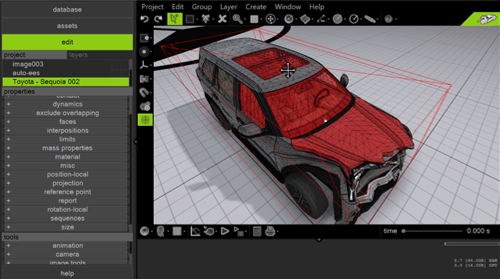
Topics in this course include:
Overview of application layout
Understanding the 3D workspace
Accessing vehicles and objects
Manipulating the shape and properties of objects
Note: This course qualifies for 3 ACTAR CEUs.
Recently updated!
Essentials | Virtual CRASH 3, 4, 5, 6 Simulation Basics

Topics in this course include:
The dynamics menu
Diagram tool
Reports and simulation data
Fast control icons
The auto driver / path follow
The Adaptive Driver System (ADS)
Note: This course qualifies for 4 ACTAR CEUs.
Recently updated!
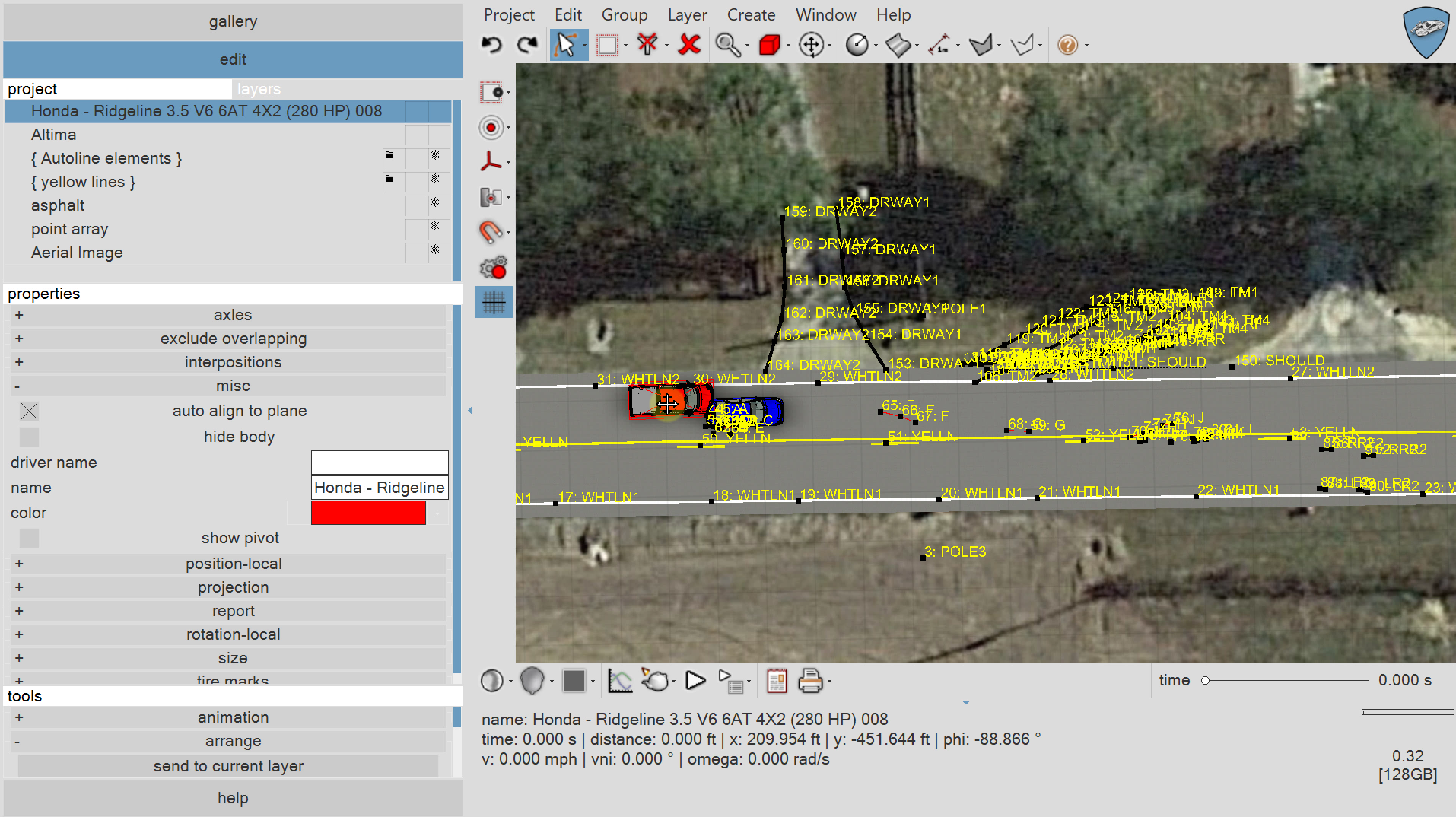
Essentials | Virtual CRASH 4, 5, 6 Building Environments
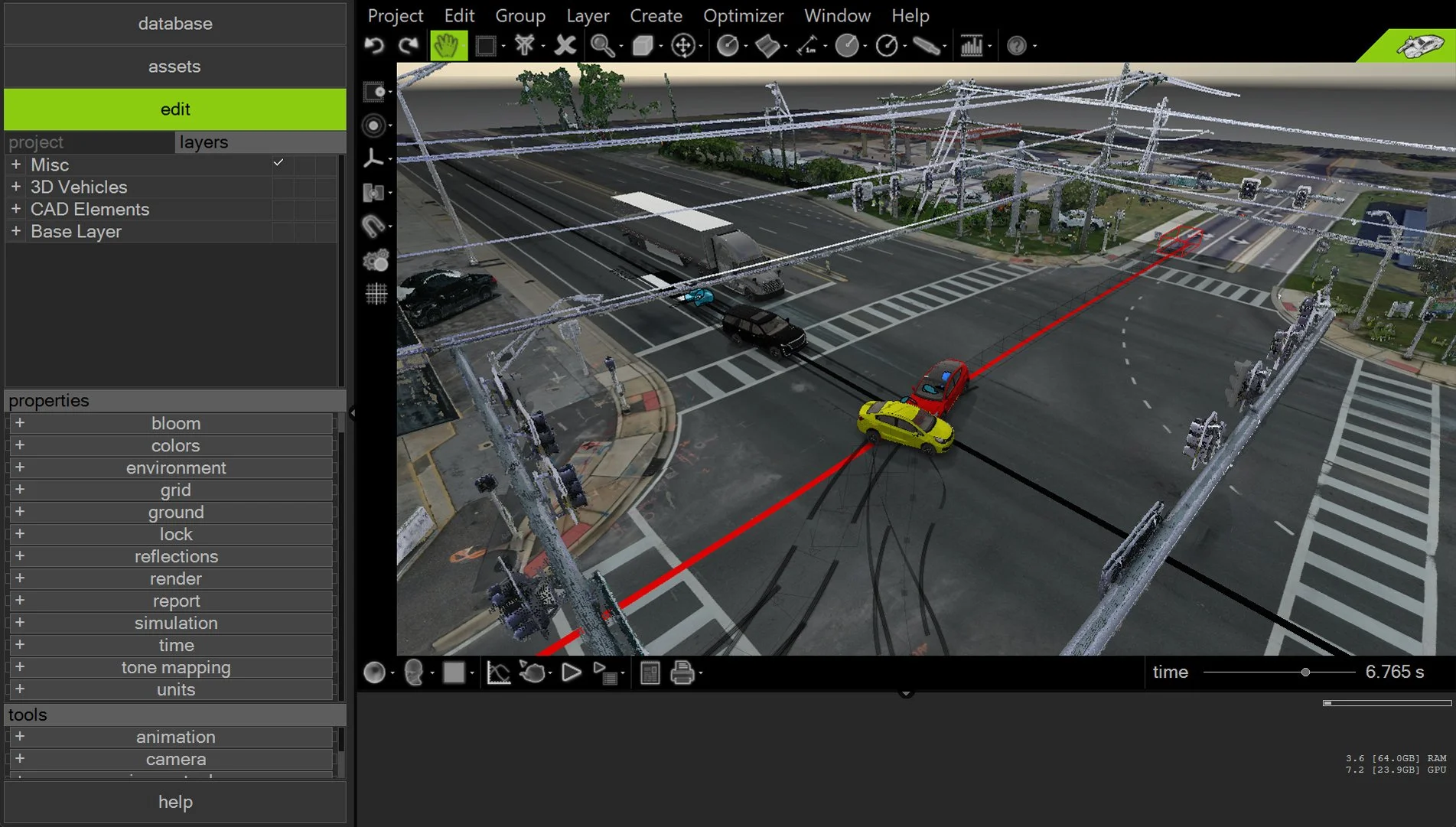
Topics in this course include:
Importing and scaling aerial images
Using total station data
Using point cloud data
Creating detailed scale diagrams
Using traffic signals
Note: This course qualifies for 8 ACTAR CEUs.
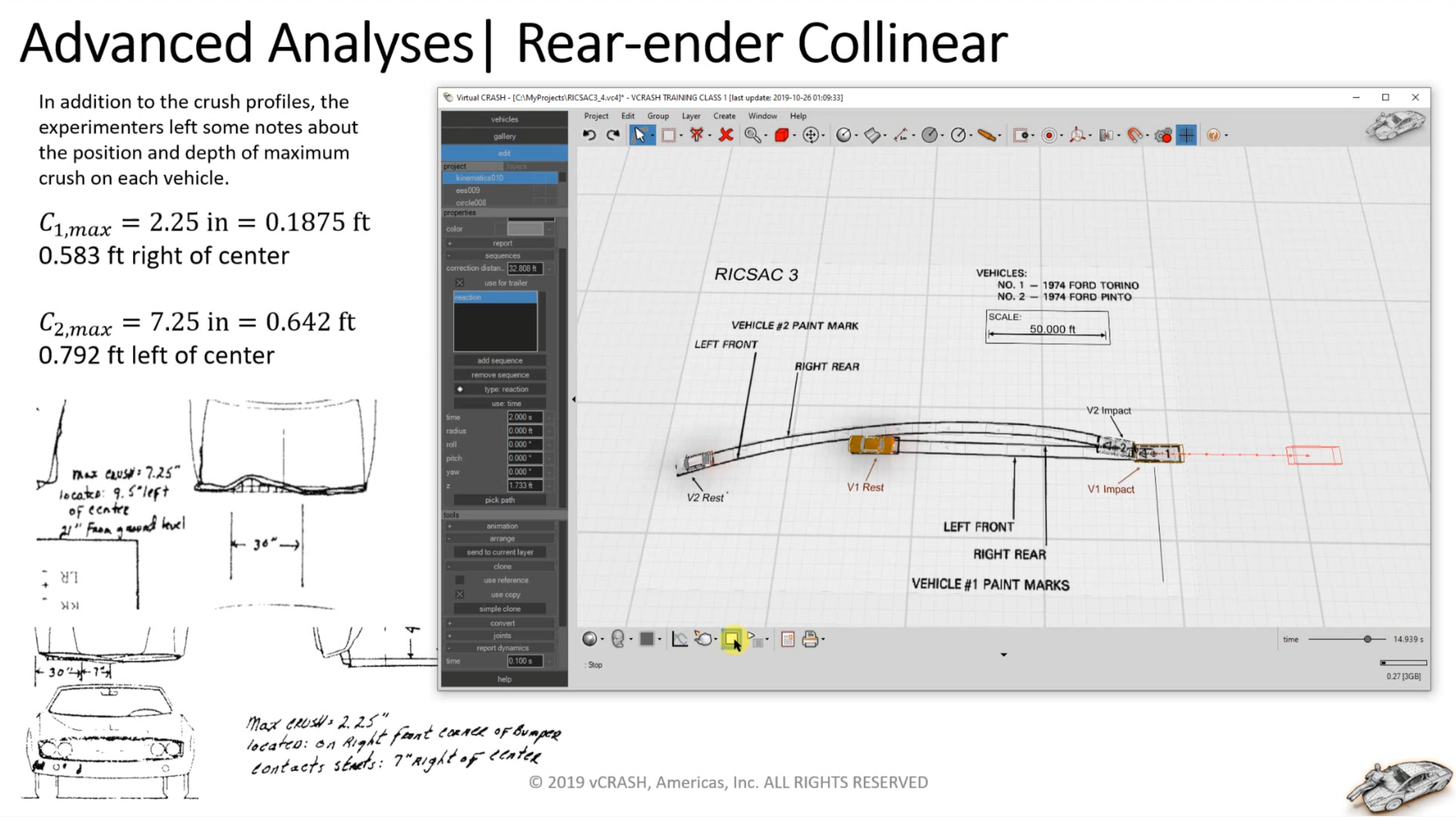
Topics in this course include:
Simulating Point-mass approximations.
Simulating post-impact motion and using results in a momentum conservation analysis.
Collinear impact simulations.
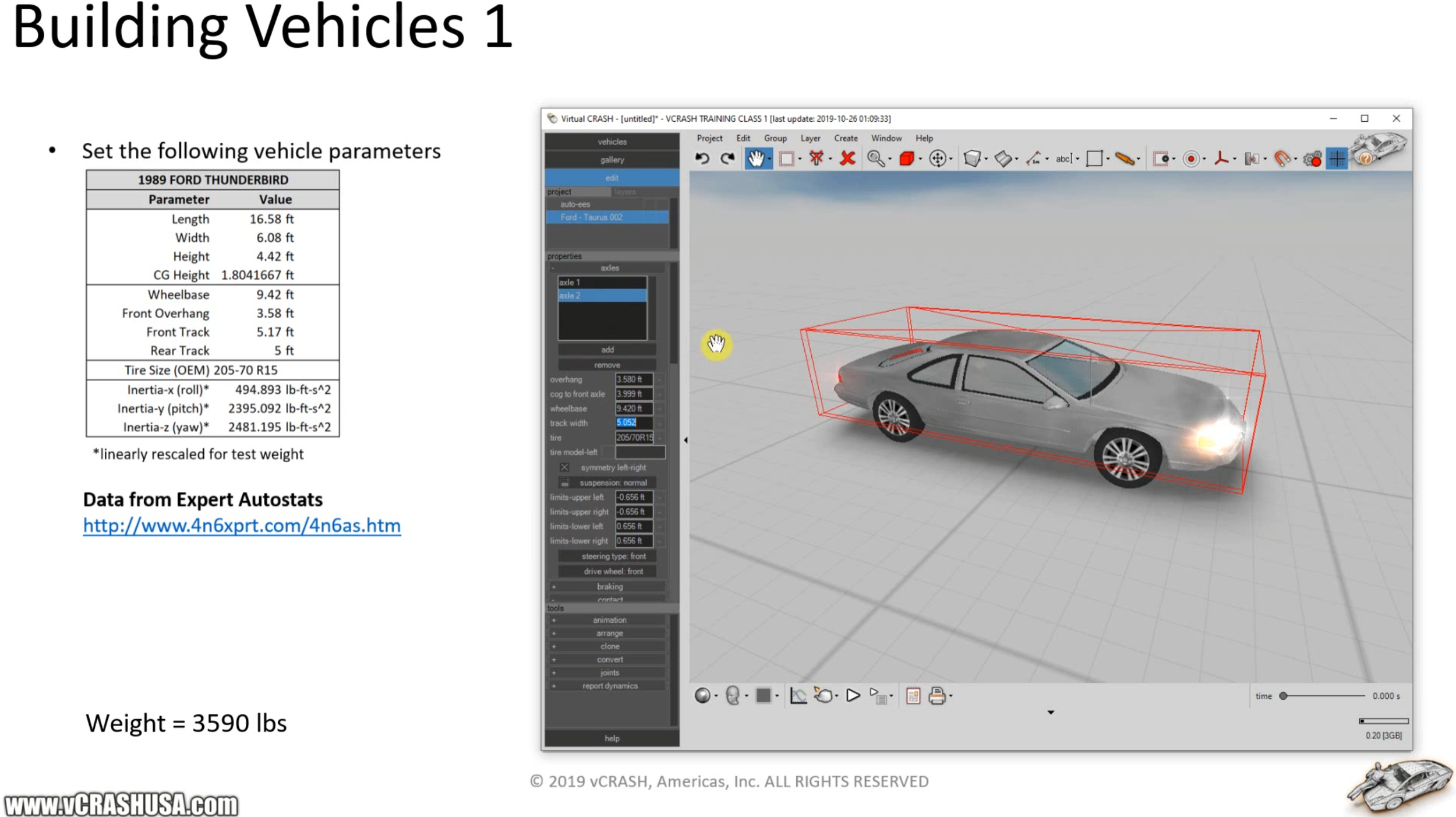
Topics in this course include:
Making repairs to meshes.
Setting material types.
Inputting vehicle data.
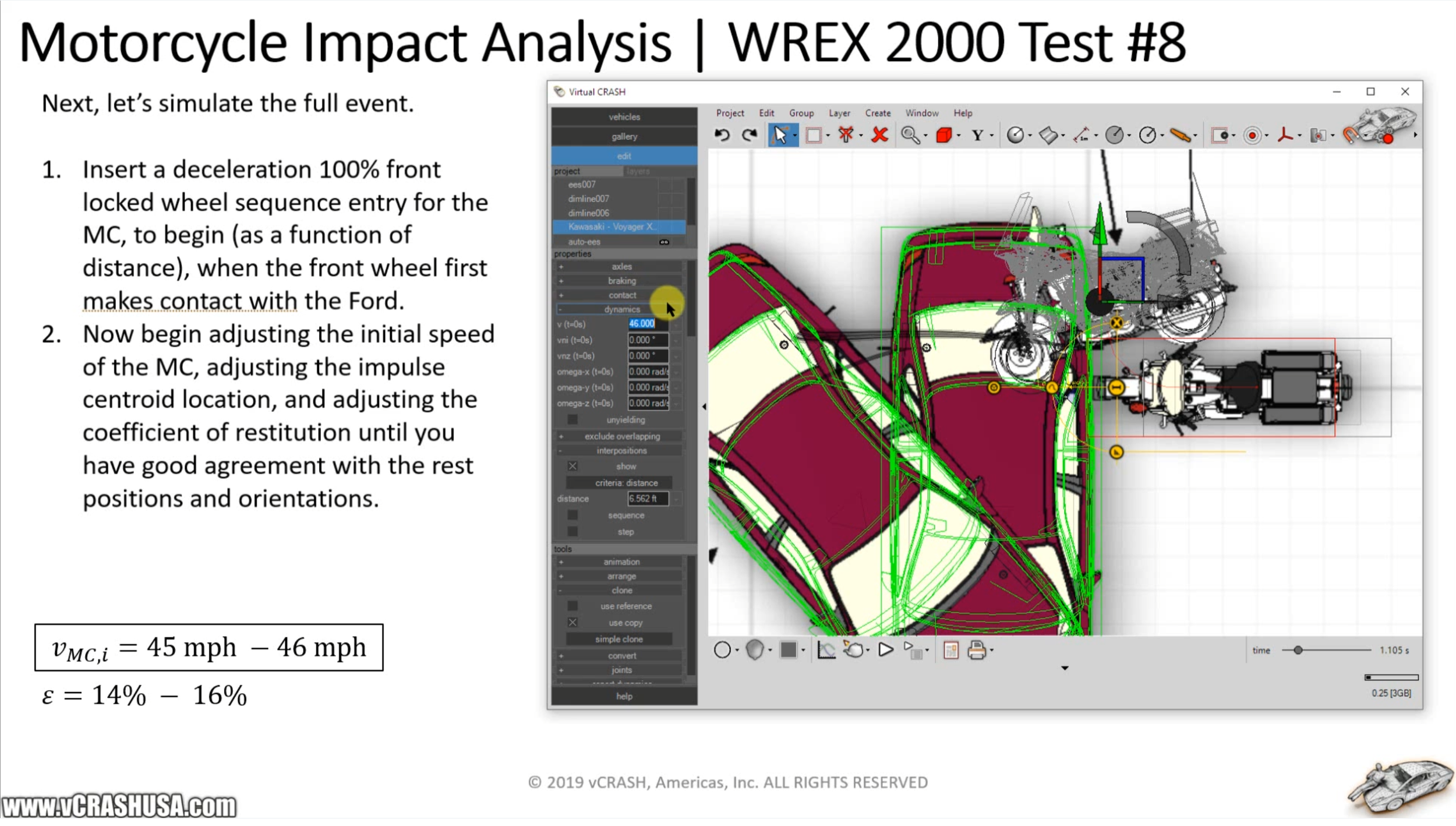
Topics in this course include:
Importing and scaling aerial images and diagrams.
Basic review of impulse momentum based simulations.
Simulating with point-mass approximations.
Simulating post-impact motion and using results in a momentum conservation analysis.
Motorcycle t-bone impact simulations.
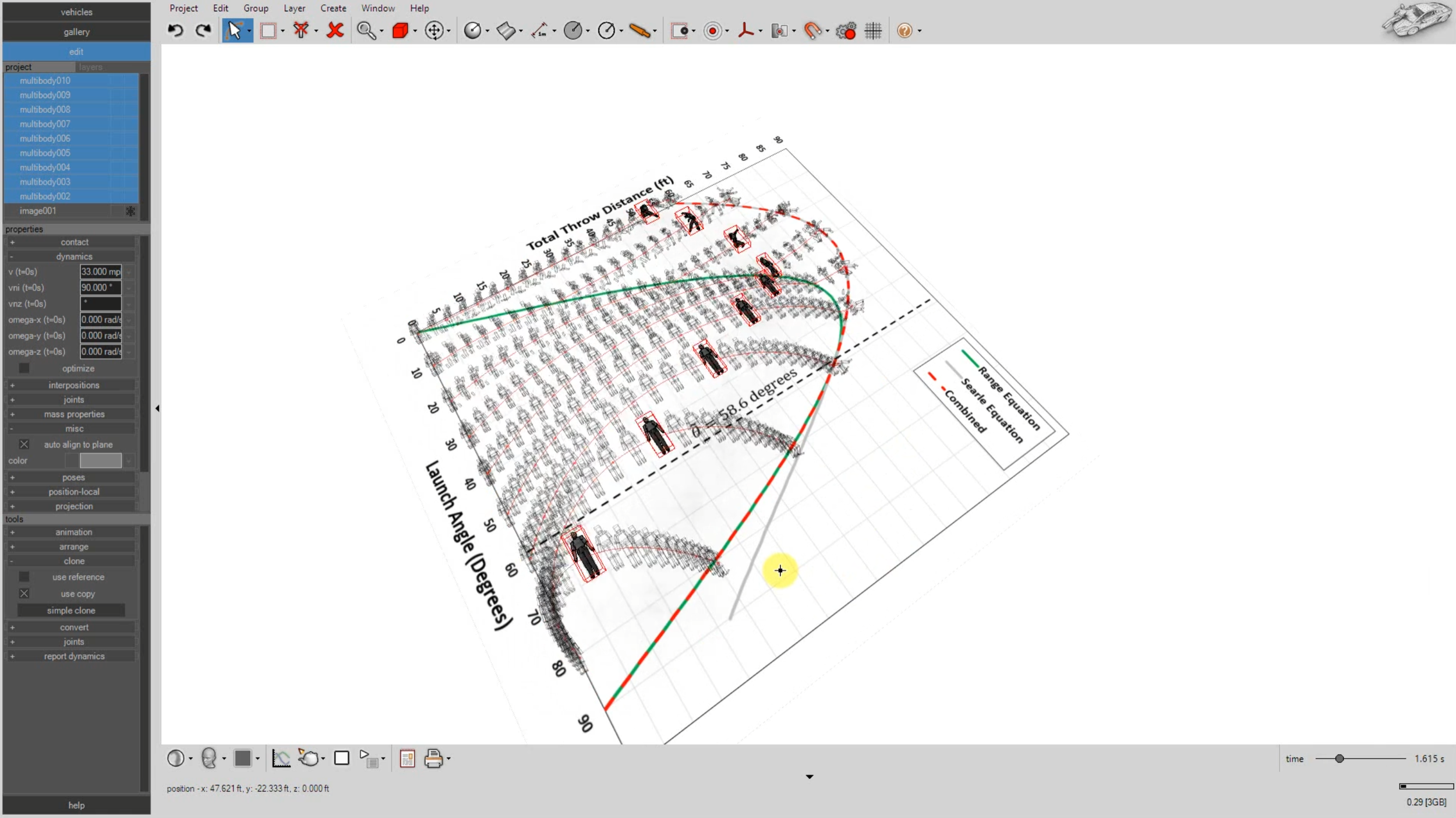
Topics in this course include:
Importing and scaling graphs to use within a simulation.
Basic review of multi-point contact impulse momentum based simulations.
Objects undergoing uniform acceleration and deceleration.
Projectile motion.
Ground-impact impulses.
Objects tumbling and sliding to stop.
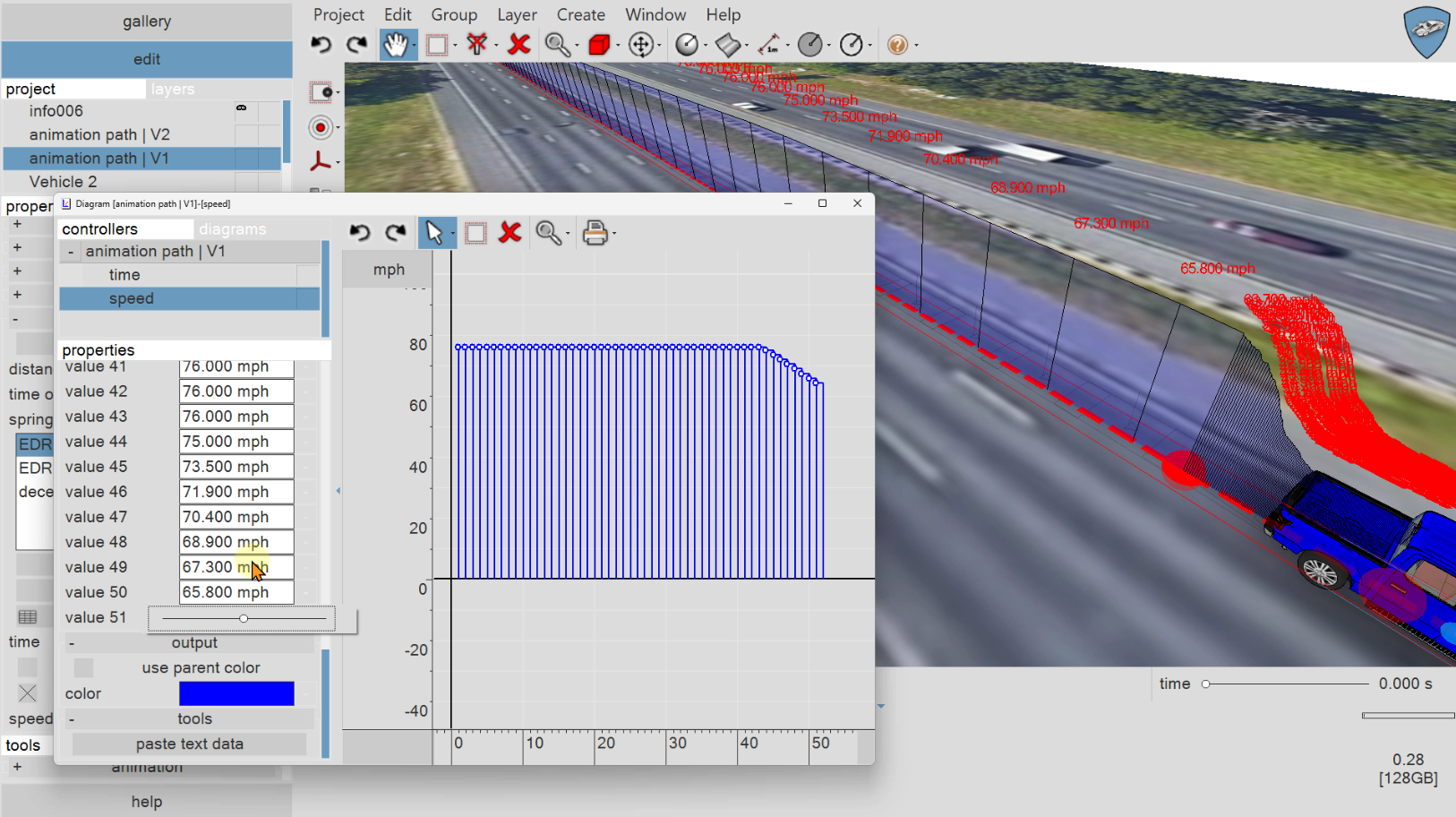
Topics in this course include:
Drawing and editing animation paths
Using sequences.
Using interpositions.
Incorporating EDR data.
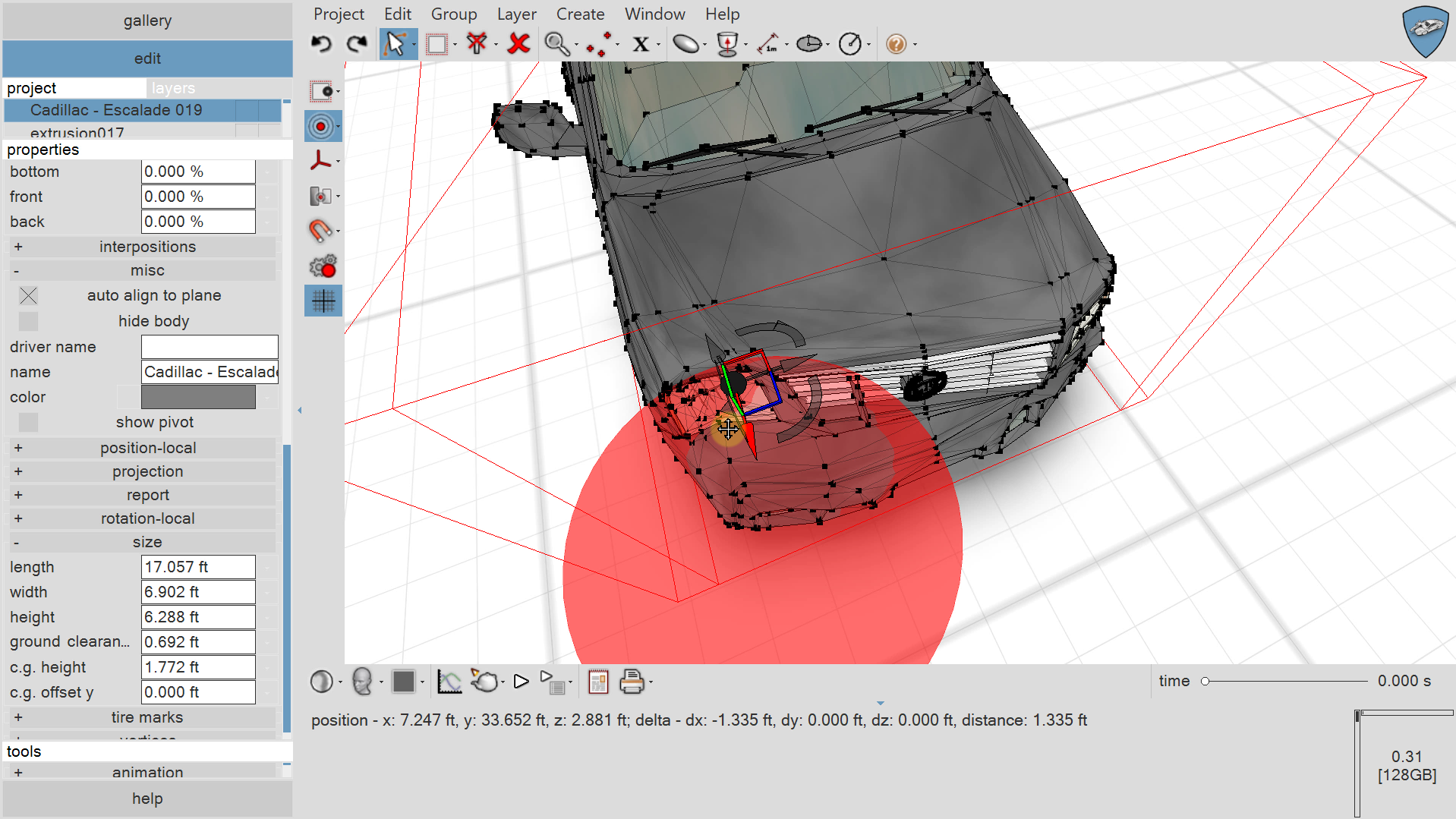
Topics in this course include:
Overview of application layout
Understanding the 3D workspace
Accessing vehicles and objects
Manipulating the shape and properties of objects
Topics in this course include:
Using CAD tools
Importing and scaling aerial images
Using total station / RTK GPS data
Creating detailed scale diagrams